


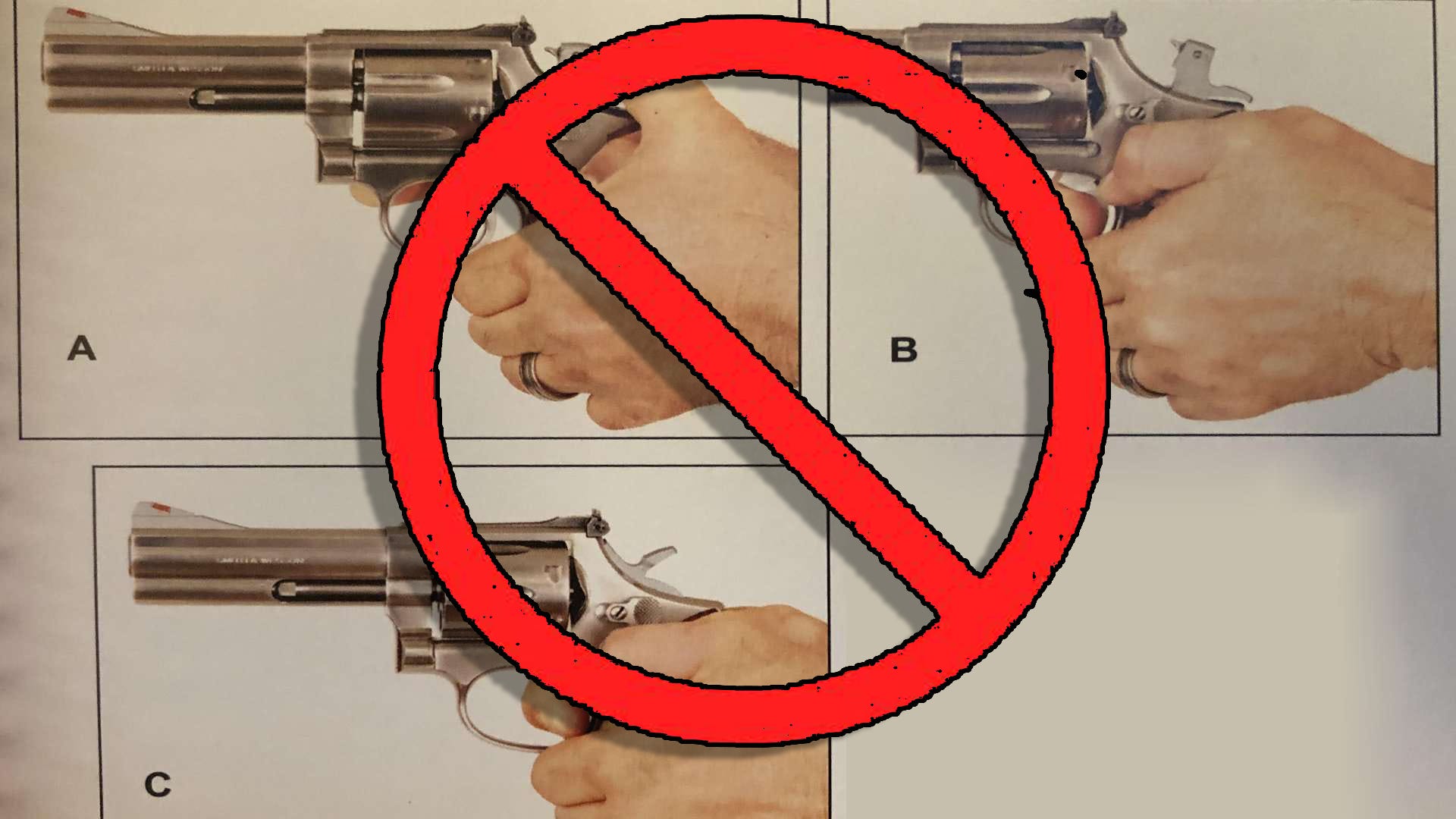
Most gun owners are lazy at the range. They pull out a fine double-action sixgun, immediately cock the hammer with their thumb, and gently squeeze a crisp two-pound trigger. The target shows a tight group. Smiles follow. Self-satisfaction reigns supreme.
Tragically, this habit builds false confidence.
Roy Huntington and I recently tackled this persistent range habit. Old shooters used to say single-action shooting makes you a marksman, while double-action shooting makes you a real shooter. Truth be told, thumb-cocking a defensive revolver in a tight spot is amateur hour and dangerously unsafe.
Consider the mechanical reality. A double-action trigger pull requires real hand strength, deliberate finger control, and smooth follow-through. Lazy shooters bypass this process by thumbing the hammer back. They reduce a twelve-pound deliberate trigger pull down to a hair-trigger stroke. Target shooting on a quiet Sunday afternoon forgives that crutch. Real life stress does not.
High-stress environments trigger sympathetic muscle contractions. Fingers tighten involuntarily. Walking down a dark hallway with a thumb-cocked revolver transforms a defensive firearm into a ticking time bomb. Two pounds of pressure separates complete safety from a catastrophic unintended discharge.
Courts hold people accountable for negligence. Saying ‘it went off by accident’ carries zero weight when prosecutor panels review hair-trigger mechanics. Roy recalled testifying in a homicide trial centered around this exact mistake. A defendant claimed his cocked revolver slipped and fired without a finger touching the trigger. Internal safety mechanisms proved otherwise. The transfer bar mechanism requires a full trigger hold to discharge. Fooling physics remains impossible.
Mastering the double-action trigger requires understanding staging. Smith & Wesson revolvers offer clear tactile feedback. Shooters feel the initial cylinder bolt drop. Continuous smooth pressure rotates the cylinder. The finger pad contacts the frame. A second click indicates the cylinder locking in place. Final pressure releases the sear. Mastering this sequence creates absolute precision.
Roy proved this recently to a veteran shooter of forty years. The experienced shooter claimed double-action revolvers were inherently inaccurate. Two minutes of dry-fire instruction on proper staging changed his mind. His very next live cylinder produced a teacup-sized group at ten yards. Smooth technique triumphs over brute speed every single time.
Dry-fire practice costs nothing. Clear your firearm completely and remove all live ammunition from the room. Then, practice pressing the trigger through its natural cycle. Learn where the pressure builds, identify the exact moment the cylinder locks and develop muscle memory. Ditch the thumb-cocking crutch forever. Becoming a true shooter demands working through the heavy pull.
Watch the episode:
Learning to master a double action trigger prepared me to shoot just about any gun.
Great exercise to defeat flinch with the pocket cannon.