


Summer is officially here, and depending on where you live, the weather has transitioned into that special kind of miserable where the humidity is thick enough to chew.
If you’re spending hours outdoors right now—whether you’re working a match, running a multi-day shooting class, mowing the back forty, or rucking a heavy pack—you already know that heat is a genuine safety issue. It doesn’t take much to go from “man, it’s sticky out here” to looking like someone pulled your plug.
For decades, the standard, well-meaning advice was simple: just pound more water.
But if you’ve ever spent an August at a place like Gunsite Academy, sweating through your shirt by 9:00 AM, you probably learned the hard way that water is only half the equation. If you just dump gallons of plain water into your system without replacing what you’re actually losing, you run out of gas, get nauseous, and hit the wall hard.
Naturally, this problem has spawned a massive, $6.7 billion “Big Hydration” industry.
Walk down any drink aisle and you’ll find shelves lined with brightly colored powders and neon bottles promising rapid hydration, cellular absorption, and “proprietary matrices” developed by scientists in lab coats. The labels boast about added B-vitamins for “energy,” exotic antioxidants, and rare trace minerals harvested from remote mountain peaks.
It’s marketing hype at its absolute finest.
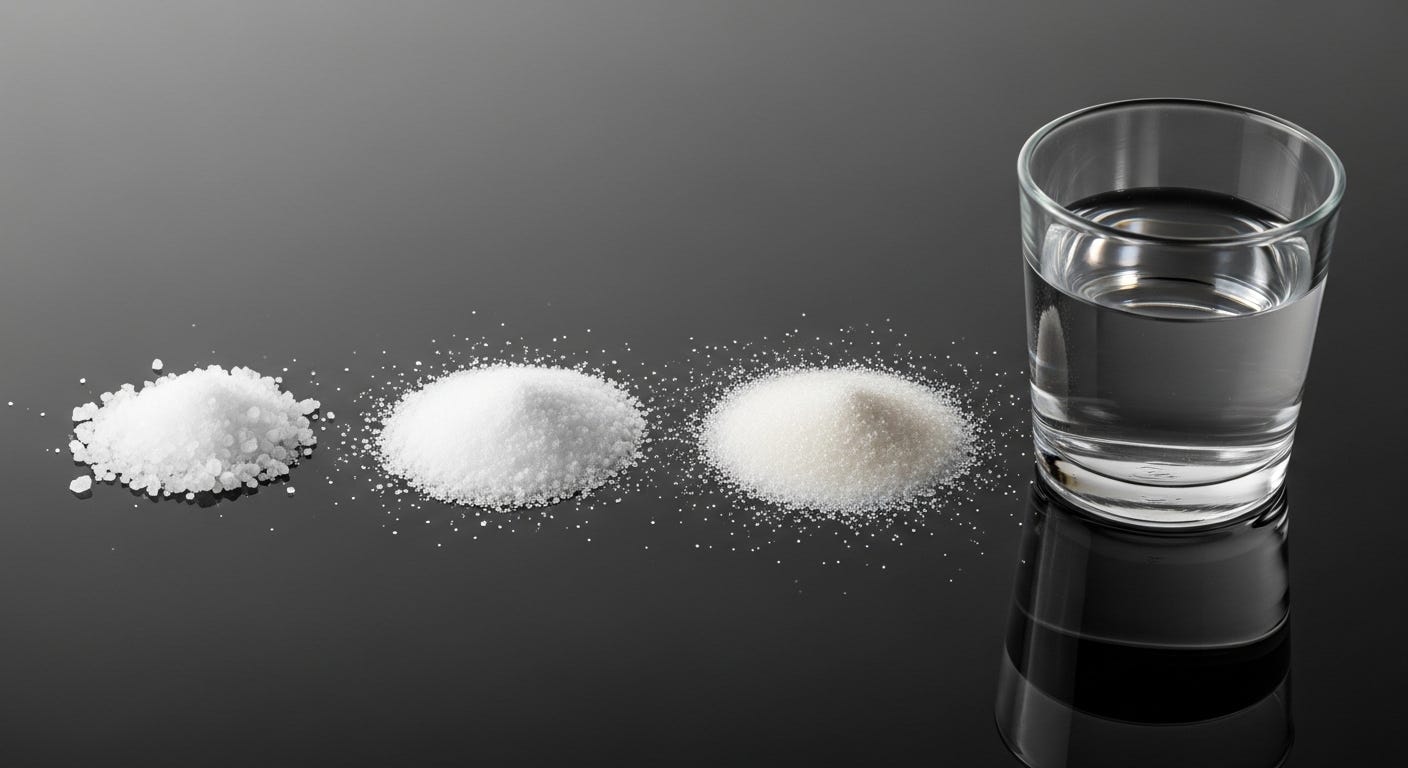
I recently decided to bypass the marketing copy and look at the actual science of oral rehydration. Guess what? The premier medical rehydration formulas used globally to save millions of lives don’t contain rubidium or Tahitian swordfish extract. They contain three basic things: water, salt, and sugar.
When you sweat, the primary electrolyte you dump is plain old sodium chloride. Salt. And that little bit of sugar? It’s not just for flavor; human physiology absorbs water and sodium much more efficiently when glucose is present. It “greases the on-ramp” to get the good stuff out of your gut and into your system.
The trouble is, commercial sports drinks are formulated for consumers, not pure performance. A truly high-sodium drink tastes salty, so big brands compromise on the science to make it taste like fruit punch.
So, being a cynical gun writer with a pantry full of baking supplies, I decided to mix up my own five-cent range elixir based on standard rehydration science:
1 quart of water
1/2 teaspoon of standard table salt (for the sodium)
1/8 teaspoon of Morton “Lite” Salt (to catch the potassium)
1 tablespoon of sugar (to activate the absorption)
Now, I’m not going to lie to you—the sports drink military-industrial complex is not shaking in its boots over the flavor profile. Out of the pitcher, it tastes exactly like what it is: slightly salty water. It is not a delightful beverage to sip while reading light poetry.
But out on a hot trail or a blistering range day? It works exponentially better than plain water or the sugary, bright-blue stuff. To make it palatable, I just toss in a small packet of sugar-free pink lemonade mix.
It’s cheap, it’s unglamorous, and it completely strips away the marketing nonsense. If you want to impress your buddies on the range, just tell them you’re drinking a bespoke, proprietary solution of salinated dihydrogen monoxide with an added sucrose blend. They’ll probably try to buy a cup off you.
I wrote a full breakdown over at GUNS Magazine detailing the exact science behind fluid loss, why piling on extra vitamins is like overfilling the engine oil in your truck, and how to mix this up for your next range trip.
What’s your go-to play for surviving a brutal summer range day? Are you mixing up your own concoctions, or are you still paying five bucks a bottle for neon-colored marketing? Let’s talk about it in the comments.