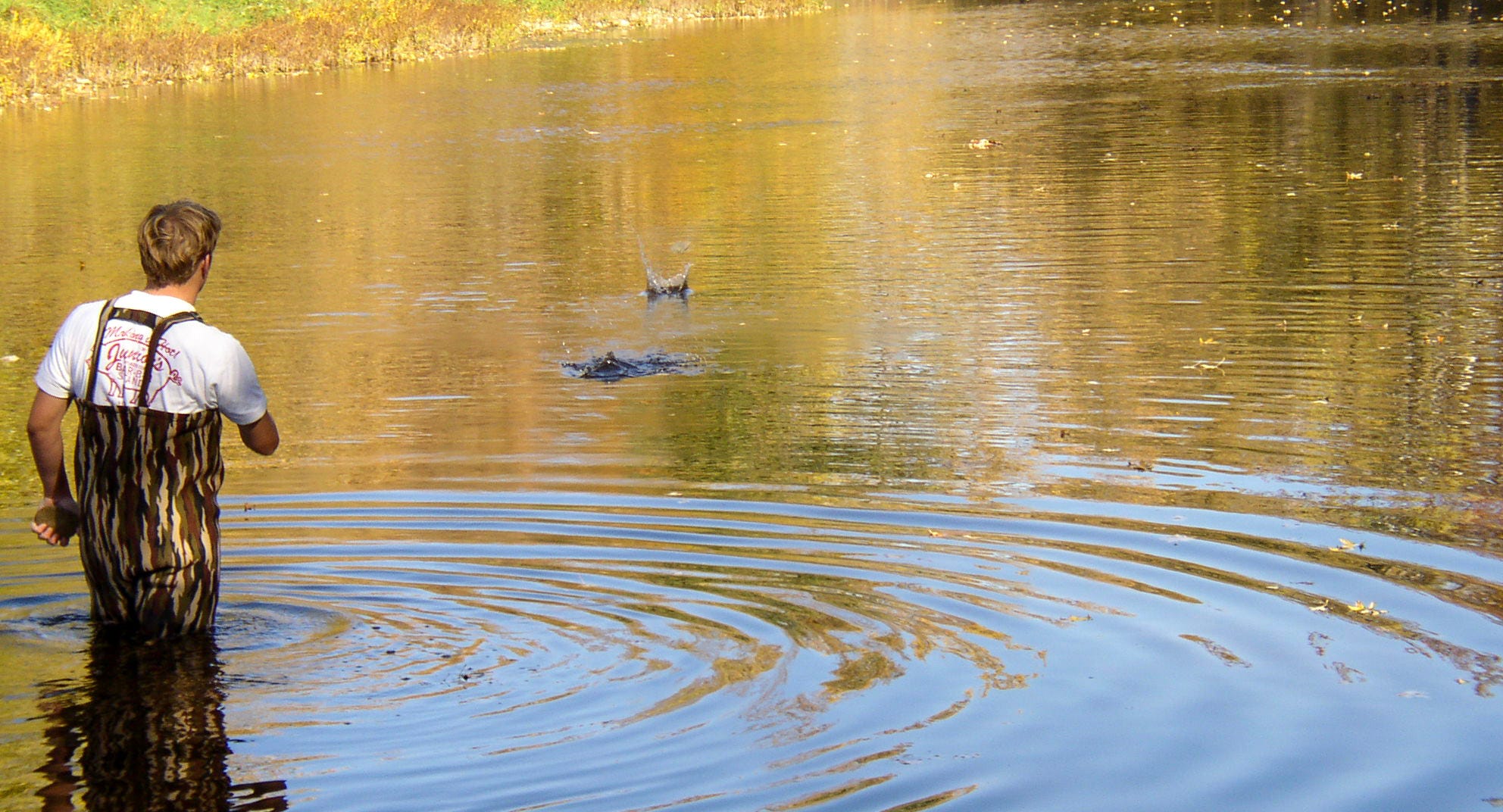
My wife and I were walking along a creek the other evening on an unseasonably warm day when we stumbled into a pile of opportunity.
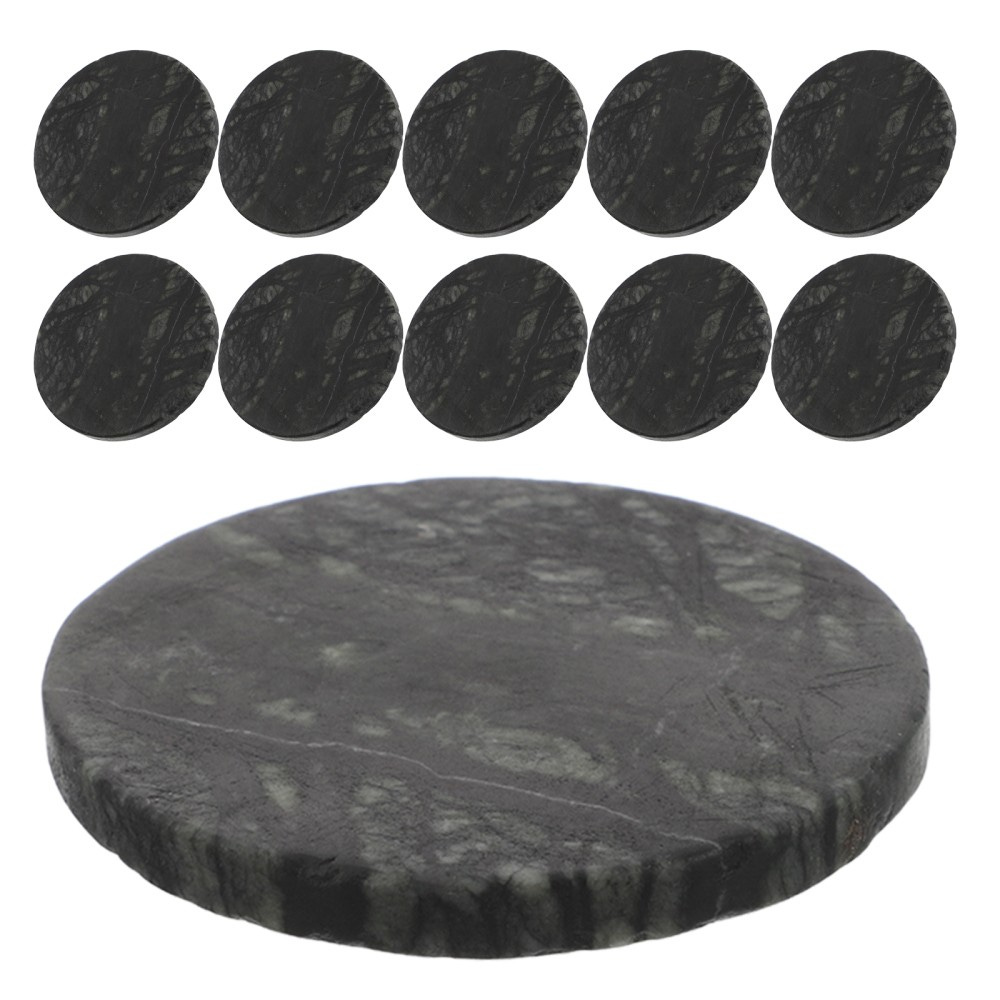
Scattered along the bank were the holy grail of creekside treasure: round, palm-sized, thin, smooth rocks — the kind that practically beg to be thrown. I’ve been skipping rocks for nigh on 50 years and don’t remember who taught me. Maybe no one did. Maybe this is one of those ancient skills baked into boyhood DNA.
But there we were, married adults, and I learned a deep, dark secret from my wife: she had never been taught how to skip a rock.
It never occurred to me that people need rock-skipping lessons.
Apparently, they do.
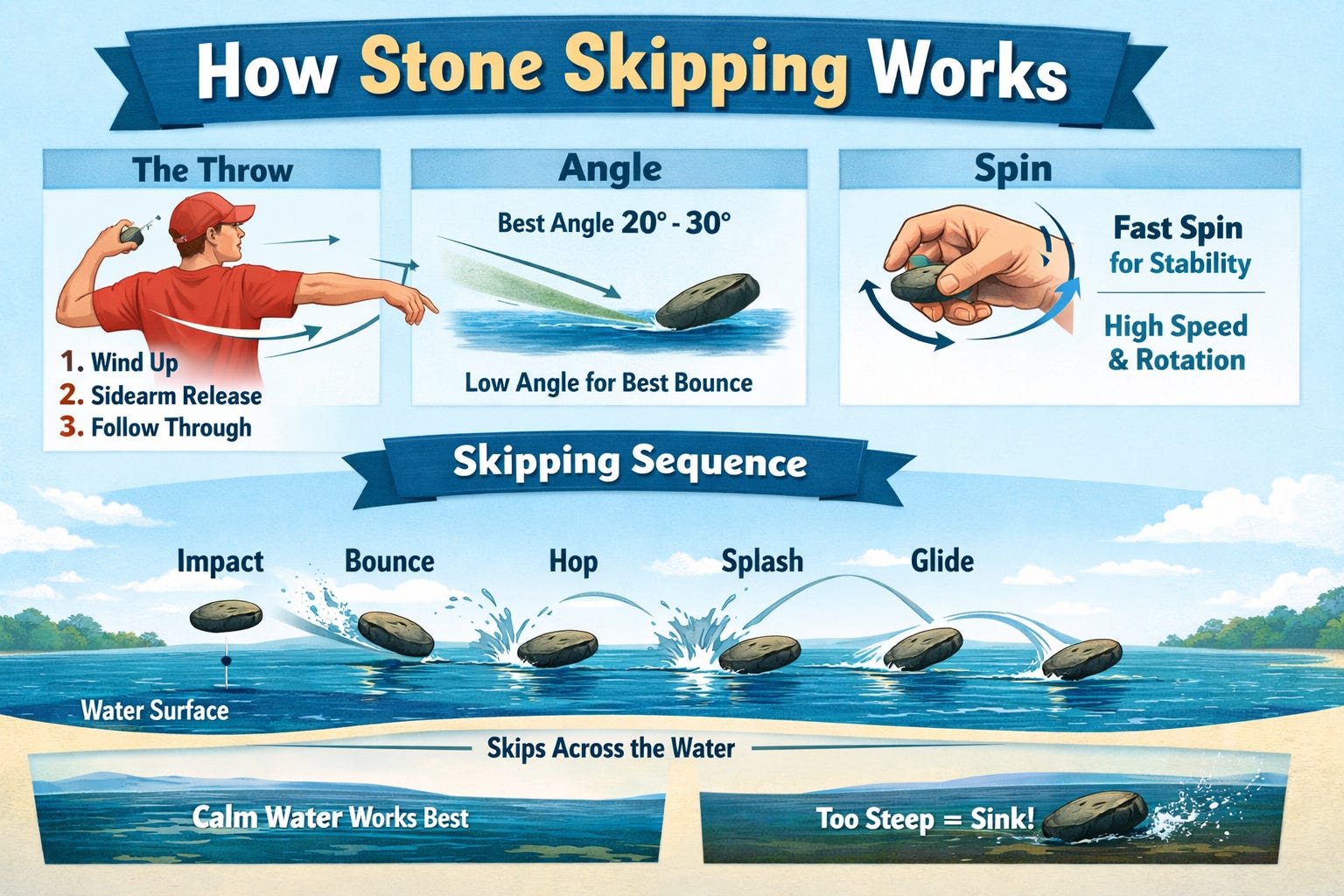
And so began a formal, creekside seminar in the physics and art of stone.
Step One: Rock Selection (Half the Battle)
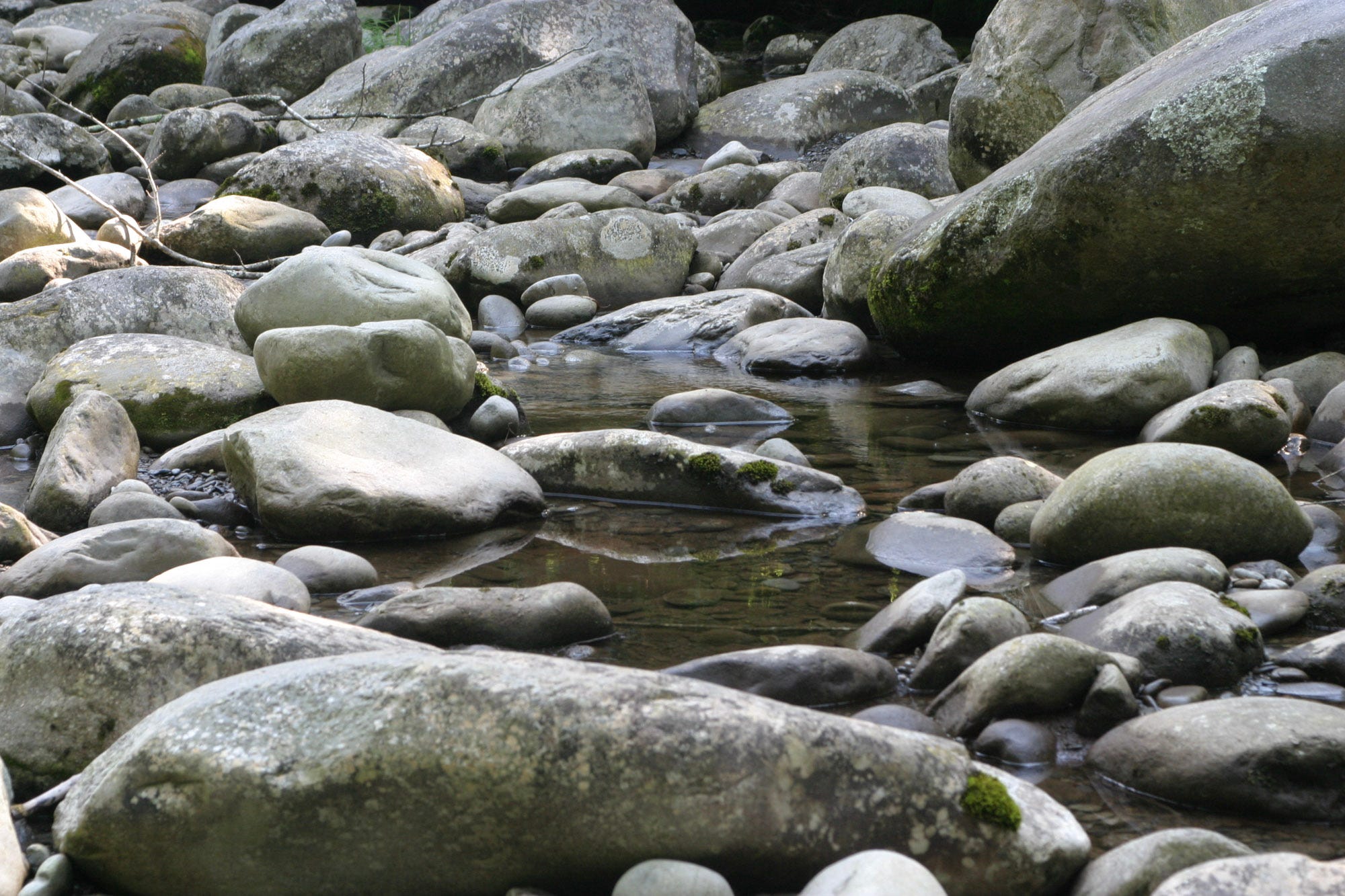
Not all rocks are created equal.
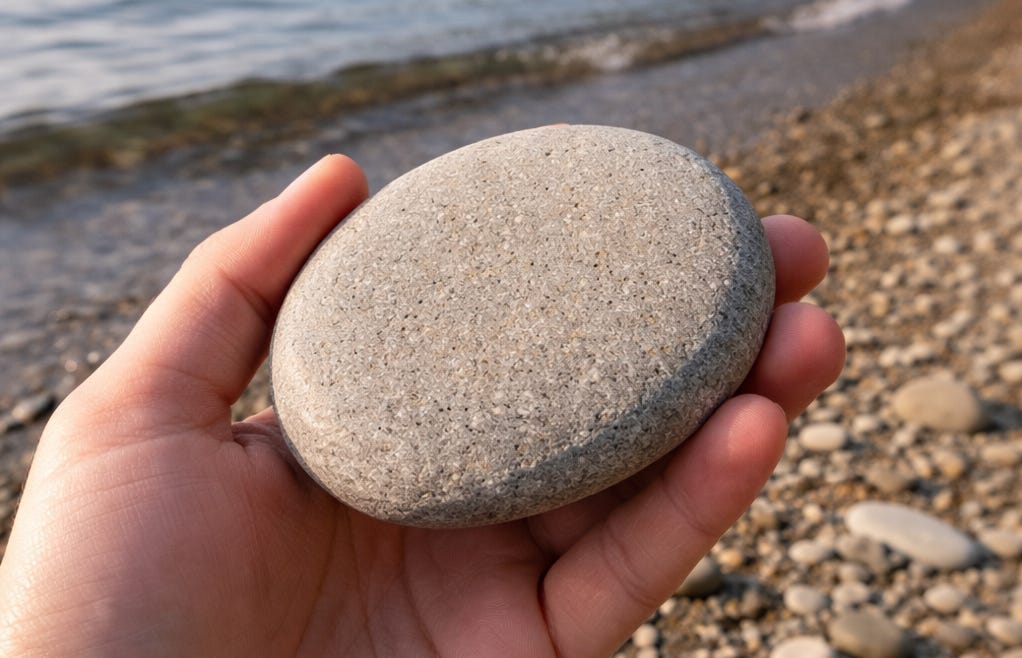
You’re looking for:
Palm-sized or smaller
Rounded edges
Thin and flat
Smooth
Beginners often think bigger is better. It’s not, but smaller and thinner present problems too—are actually harder to throw consistently. Start with something that fills your palm but doesn’t weigh like a brick.
Of course, any male who has participated in this activity under the age of 15 has tried to skip dinner-plate (and larger) sized rocks, with varying results.
The flatter the rock, the better. You’re trying to create lift off the water’s surface. If it’s lumpy, thick, or shaped like a potato, it’s going to nose-dive like a bad investment.
Choose wisely. The rock matters.
Step Two: The Throw
You’ve got two main delivery systems:
Outside arm (traditional sidearm throw)
Inside arm (more like throwing a frisbee across your body)
I use outside arm like the majority of folks. It’s more controllable in my book. The motion is smooth, low, and level, almost like you’re skimming something under a fence. My wife made attempts with inside arm technique but quickly realized why outside arm generally works better.
Regardless, the key is angle. The rock’s face must be nearly parallel to the water’s surface at impact. Not vertical. Not steep. Nearly flat. Fifteen to twenty degrees is your window.
If the rock dives:
It wasn’t flat enough.
Or your angle was too steep.
The water — which is non-compressible — resists the rock on impact. That resistance creates lift. The rock bounces. It climbs back into the air. Repeat the process fast enough, and you’ve got a string of skips.
But here’s what people miss:
You must throw it with conviction. A timid toss makes a polite splash while a firm, snapping throw makes contact hard enough to force the rock back into the air. You don’t throw with violence, but you need commitment!
Step Three: Practice (and Humility)
Seven skips is respectable. Ten or more? Now you’re doing something.
But here’s the truth after a five decade career:
Not every rock will work.
Not every throw will work.
Sometimes a perfect rock with a perfect throw just goes plunk.
And that’s part of it.
You don’t get to control everything. You just control your form, your angle, and your effort.
Why This Matters (It’s Not About the Rocks)
We must have thrown a couple dozen rocks that evening. Some went three skips. A few went five. I had one beauty go past ten. My wife had a breakthrough moment when one finally bounced twice instead of once.
You would have thought she’d won Wimbledon.
That’s the magic of it.
Rock skipping is one of those useless skills that turns out not to be useless at all.
It teaches:
Attention to detail
Physics in motion
Patience
Repetition without boredom
Acceptance of failure
Joy in small wins
And maybe most importantly, it’s addictive.
Once you feel that first clean skip — the sharp tick off the water, the brief lift, the second bounce — you want another. Then another. Then you start hunting better rocks. Then you start adjusting angle and wrist snap like you’re tuning a rifle.
Next thing you know, you’re 50 years into a hobby that costs nothing and never gets old.
That evening, standing by the creek with my wife, I realized something simple: Mastery doesn’t have to be complicated. Sometimes it’s just you, a flat rock, and a thin margin between plunk and perfection.
And when you finally send one dancing across the surface, it feels like you’ve bent physics just enough to make the world smile back at you.
If you’ve never tried it — or haven’t in decades — find a creek. Pick up a stone. Commit to the throw.
And don’t stop until you see that first clean skip. You’ll be hooked.