


There are topics in the shooting world that spark polite conversation — and then there are topics that make people shift in their chairs. Our latest episode of Guns Podcast U.S. falls squarely into the second category.
Roy Huntington and I sat down to discuss something many gun owners quietly assume they have figured out: “I’m safe at home.” That belief is comforting. It is also, in many cases, dangerously optimistic.
The conversation was prompted by the recent kidnapping of Nancy Guthrie in Tucson, a crime that shattered the long-held illusion that danger politely waits outside your front door. If anything, criminals often prefer the opposite — they count on the moment you relax.
Let me be clear about something upfront: this episode is not about paranoia. It’s about preparedness.
Too many people treat the home like a childhood game of King’s X — the base where nothing bad can happen. But a firearm locked away in another room is little more than an expensive paperweight when seconds matter. Crimes of opportunity unfold with startling speed, and the distance between you and your defensive tool suddenly becomes very important.
Roy brought a practical perspective to the discussion by walking through his own home-defense strategy. What stood out wasn’t a fixation on hardware — it was the emphasis on layers.
Good lighting. Cameras. Reinforced locks. Even thorny landscaping.
Security is rarely about one dramatic solution. It is about forcing a criminal to reconsider your house and move on to an easier target.
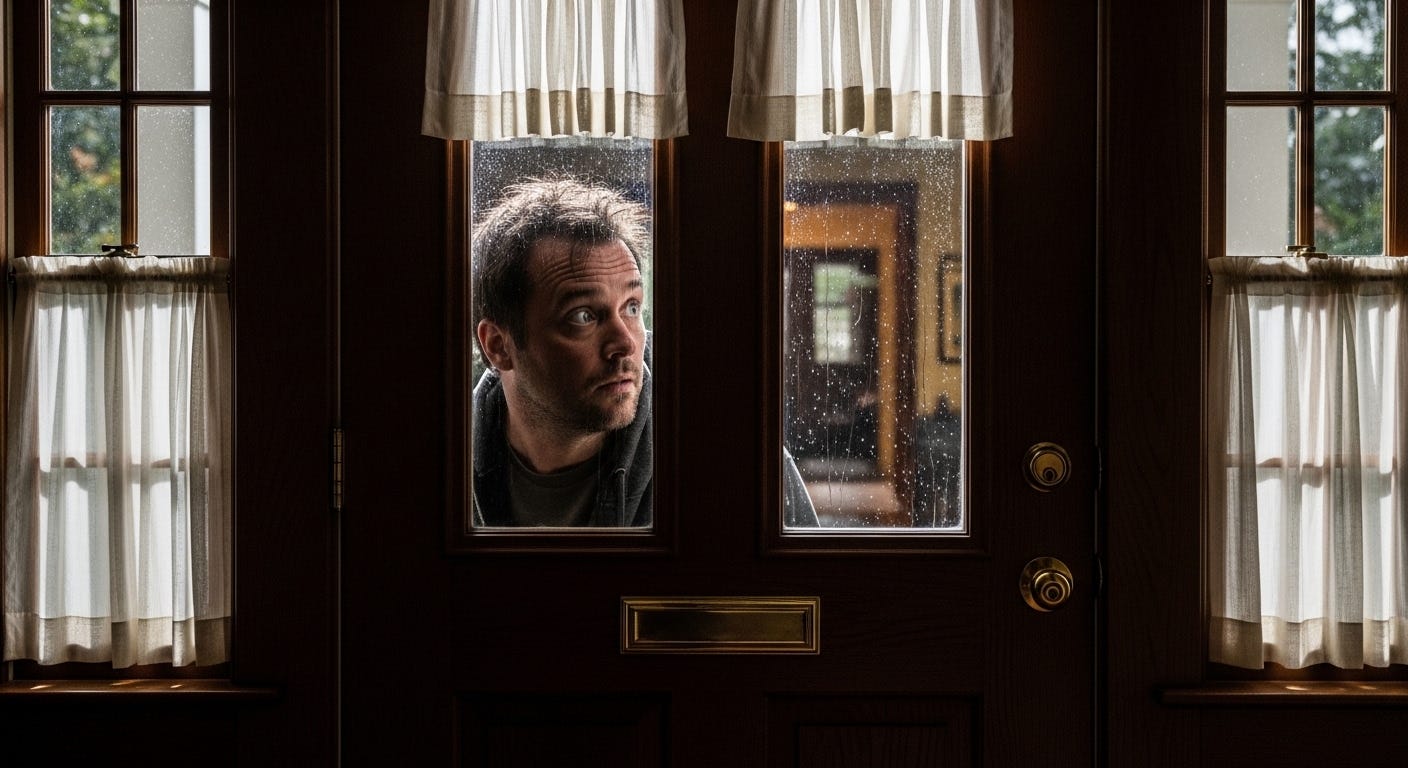
One part of our conversation that I suspect will resonate with listeners is the modern tactic of criminals posing as delivery drivers. We live in an era where packages arrive daily and doorbells ring without warning. That familiarity can breed dangerous reflexes.
Opening the door to a stranger is no longer a harmless social norm — it is a decision that deserves more thought than most of us give it.
We also spent time discussing the bedside gun — a staple of American self-defense culture — but with a dose of physiological reality. When you wake from deep sleep, you are not instantly alert, coordinated, or tactically brilliant. You are groggy. Disoriented. Potentially clumsy.
Any serious plan must account for that human factor.
One of the more practical ideas to emerge from the episode was the concept of a “tactical bedside pouch.” Nothing fancy — just intentional. A flashlight, a knife, perhaps a tourniquet. Tools that support decision-making instead of forcing you to improvise in the worst possible moment.
Add motion-sensor nightlights and suddenly you have an early-warning system that costs less than a dinner out.
Preparedness does not have to be expensive. It does, however, require thought.
If there is a single theme running through this episode, it is this: security is a mindset, not a purchase. Whether you live on acreage miles from town or in a tightly packed subdivision, the responsibility is the same.
Your home is worth defending — but more importantly, the people inside it are worth planning for.
Comfort is not a strategy.
Give the episode a listen, and as always, I’d like to hear where you land on this question:
Do you carry at home, or do you believe the threshold of your front door changes the rules?