


If you’ve spent any time looking at older, imported firearms, you know they occupy a strange space in the gun world. Some are masterpieces; others look like they were machined using a dull butter knife and a prayer.
But every now and then, you run across a piece of hardware that is just too historic—and too cheap—to pass up.
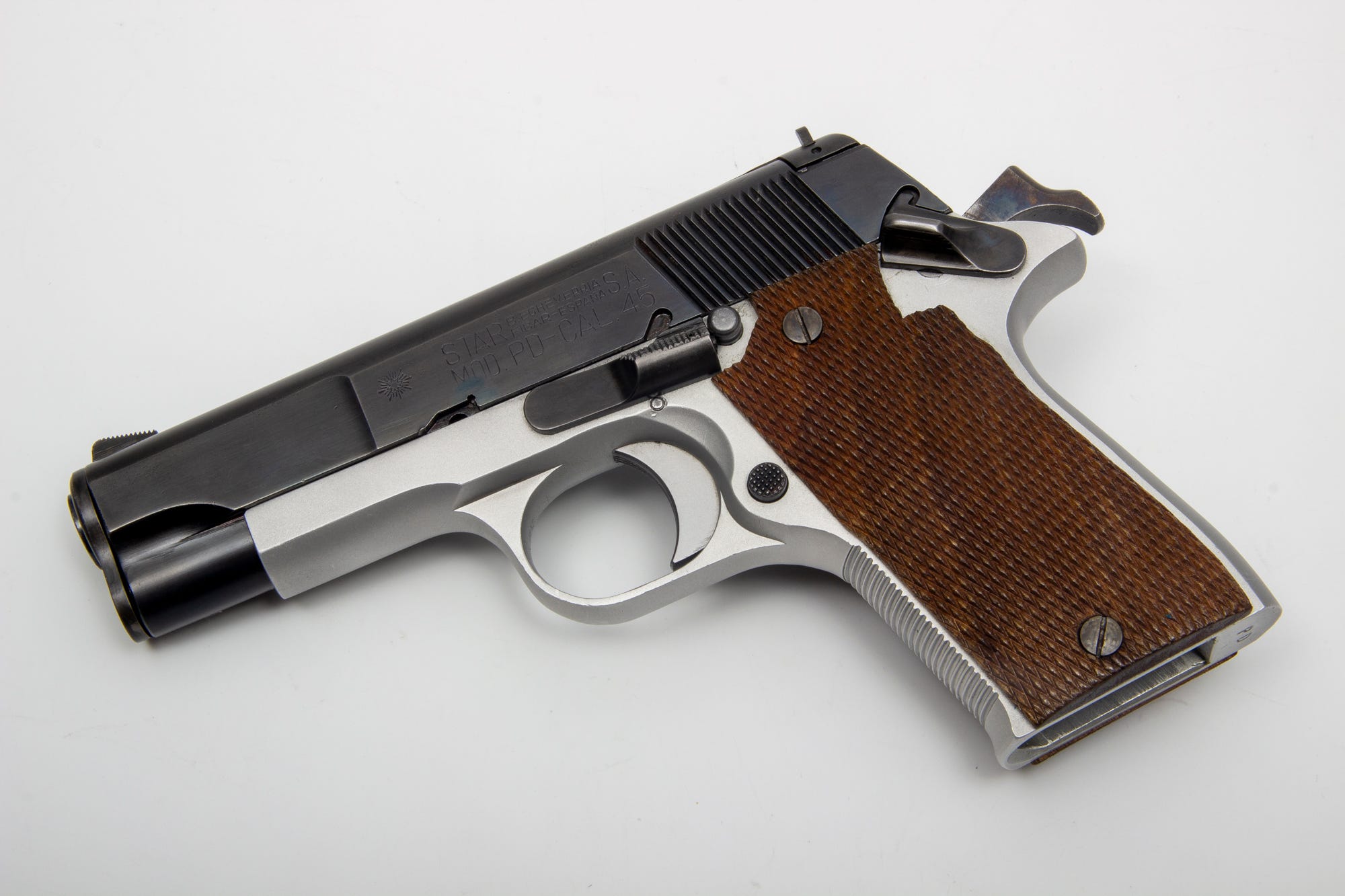
That’s exactly what happened when I picked up a battered, unloved Star PD. For those who aren’t familiar, the Star PD was a trailblazing, Basque-born, aluminum-framed micro-.45 ACP released in 1975. Long before every manufacturer under the sun offered a subcompact 1911, this little gun kicked off the trend. Even Colonel Jeff Cooper famously loved it, calling it a gun to be “carried much, shot little” (mostly because shooting a 25-ounce .45 can feel like catching a fast ball with your bare hand).
My particular Star PD didn’t look like a trendsetter. It looked like a survivor of a pawnshop riot. It had rust pitting on the slide from decades of resting against sweaty bodies, dead bluing, and a severe case of generalized neglect.
I decided it was time to turn this ugly duckling into a swan. I recently chronicled the full build over at GUNS Magazine in my piece, “Resurrecting the Star PD”, but I wanted to give you all the unfiltered, behind-the-scenes look at how it actually went down in the shop.
Lesson One: Respect the Springs
Before I even made it out to Roy Huntington’s shop in Missouri, the project kicked off with a classic gunsmithing lesson in humility.
I was detail-stripping the slide in my office to fix a sticky thumb safety. I broke the cardinal rule: always keep your finger over the plunger hole. Zing. The safety plunger and spring instantly launched themselves into low Earth orbit. I spent an hour scanning the carpet inch by inch before hanging my head in shame and placing an order with Numrich Gun Parts. With my replacement parts secured, I packed up the pitted frame, the slide, and the remaining shreds of my dignity, and headed to Roy’s place.
Workshop Alchemy
The moment we got into the shop, Roy took immediate defensive measures. Having heard about my disappearing plunger incident, he field-stripped the gun with extreme prejudice, dropping every single microscopic component into a secure plastic box. No rogue parts were escaping into his rafters.
We split the labor: Roy handled the internal triage, and I took over the cosmetic heavy lifting.
The Frame: I fired up the bead blaster and stripped the factory blue anodizing right off the aluminum frame. Underneath, the bare aluminum looked incredibly sharp, so we decided to leave it entirely “in the white.” Not only does it give the gun a striking, modern two-tone look, but it makes it much easier to inspect the frame for cracks (a known issue with hard-shot Star PDs).
The Slide & Steel Parts: Eradicating every rust pit on the slide would have compromised its dimensions, so I used emery cloth to smooth out what I could. Then came the magic: Brownells Oxpho-Blue Creme formula. After four hand-rubbed coats, the deep, rich blue-black finish looked like it came straight out of a professional hot-dip tank.
The Grips: The original unfinished walnut slab grips were looking pretty drab. A quick application of Birchwood Casey Tru-Oil instantly woke up the wood grain and sealed it against future hand sweat and solvents.
There was, however, one minor side effect to our chemical wizardry. When I later pulled the finished pistol out of its sealed polymer case, the aroma was unmistakable. It didn’t smell like gunpowder or gun oil. It smelled exactly like a $6.99 drugstore “box perm.” Hey, beauty always has a scent.
Fixing “Bubba’s” Trigger Job
While I was busy making things shiny, Roy discovered a mechanical landmine left by a previous owner. Someone had tried to “smooth” the feed ramp but got a little too aggressive, leaving a distinct lip right where the aluminum frame met the steel barrel ramp—a perfect recipe for nose-dive malfunctions. Roy went to work with his files and stones, masterfully blending the transition back into a smooth, reliable ramp.
When we finally reassembled the gun and stepped back, we couldn’t believe it. In the span of a single afternoon, a $400 swap-meet beater had been transformed into a remarkably classy, eye-catching, and easy-to-carry piece of working art.
As Roy so eloquently put it when I asked him for a comment: “With a few simple tools and supplies (and the loan of a blasting cabinet), even Brent can do this!”
Thanks, Roy.
If you want to see the full photo gallery of the transformation, check out the article on GUNS Magazine. And if you ever find a beat-up Star PD sitting unloved in a display case, grab it. It’s a fantastic, low-budget custom project with a whole lot more soul than today’s standard “plastic fantastic” carry guns.
Just remember to keep your thumb over that darn plunger spring.