


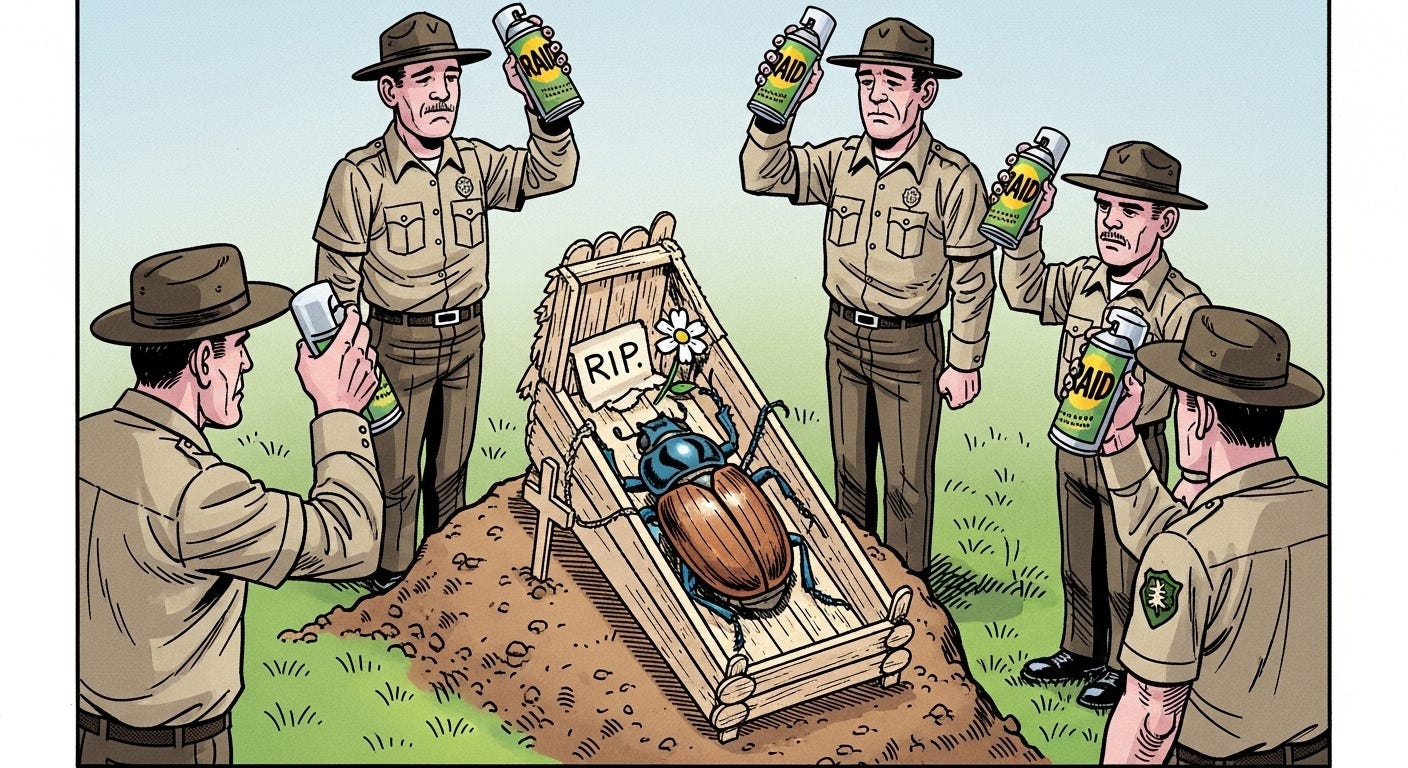
I have a confession to make: I once orchestrated a full military-style funeral for a beetle named Leroy.
And yes, this story is absolutely, 100% true.
Back in my police academy days—which was run with the kind of rigid, military boot-camp discipline that makes you sweat through your uniform even on a cold day—a drill instructor “discovered” a tiny insect carcass in the overhead light fixture of my dorm room. Despite suspecting it was planted by an instructor who took a special delight in tormenting recruits, my roommate and I were ordered to conduct a full homicide investigation and handle the victim’s remains with the utmost dignity.
Being the smartasses we were, we leaned into the bit entirely. My dad had been a funeral director, so I knew how these things were supposed to work. We built a tiny velvet-lined casket out of Popsicle sticks, set up a visitation in our dorm room complete with recorded organ music, and had a classmate who happened to be an ordained minister conduct a formal graveside service.
When the ceremony concluded, seven cadets stepped forward, each clenching a can of Raid insect spray. At my command, they rendered three perfectly timed volleys over Leroy’s final resting place.
The drill instructor showed up with off-duty staff just in time to witness the whole thing. Thankfully, he laughed, and for years, the videotape of “Leroy D. Bug’s” funeral was shown to incoming academy classes as an example of either teamwork or what happens when bored recruits have too much creative freedom.
If you want to read the full, unabridged saga of our investigation—complete with how we narrowly avoided getting court-martialed (or forced to sell paint at Walmart)—you can read the original story here in GUNS Magazine.
That ridiculous afternoon did something else, though: it sparked a lifelong curiosity.
As we were planning Leroy’s send-off, my roommate and I kept arguing about military protocol and what exactly constituted a “21-gun salute.” It turns out, that absurd prank led me down a historical rabbit hole about a military tradition that almost everyone gets wrong.
With our nation celebrating its massive 250th birthday this weekend, I figured it was the perfect time to unearth the history behind the noise. Let’s face it: a straight, dry breakdown of military gun salutes can read like a training manual. But when you anchor it to seven guys blasting bug spray into the wind, it gets a lot more interesting.
Here is what I learned when I dug into the history.
The Misconception: Three Volleys vs. 21 Guns

If you attend a military or law enforcement funeral, or watch a Memorial Day ceremony, you will inevitably hear someone in the crowd whisper, “They’re giving him a 21-gun salute.”
Usually, they aren’t.
What you are actually witnessing is a three-volley salute. It is performed by a ceremonial rifle detail (traditionally seven service members). Each fires one round on command, three times, producing 21 total shots. It’s easy to see where the math confuses people, but in strict military terminology, a “gun” refers to artillery and cannons—never shoulder-fired rifles.
The origins of the three-volley salute date back hundreds of years to European battlefields. Opposing armies would call a temporary cease-fire to clear and identify their dead. Once the field was cleared and the burial details finished, three rifle volleys were fired into the air to signal, “The dead are honored, and we are ready to resume fighting.”
What is a True 21-Gun Salute?
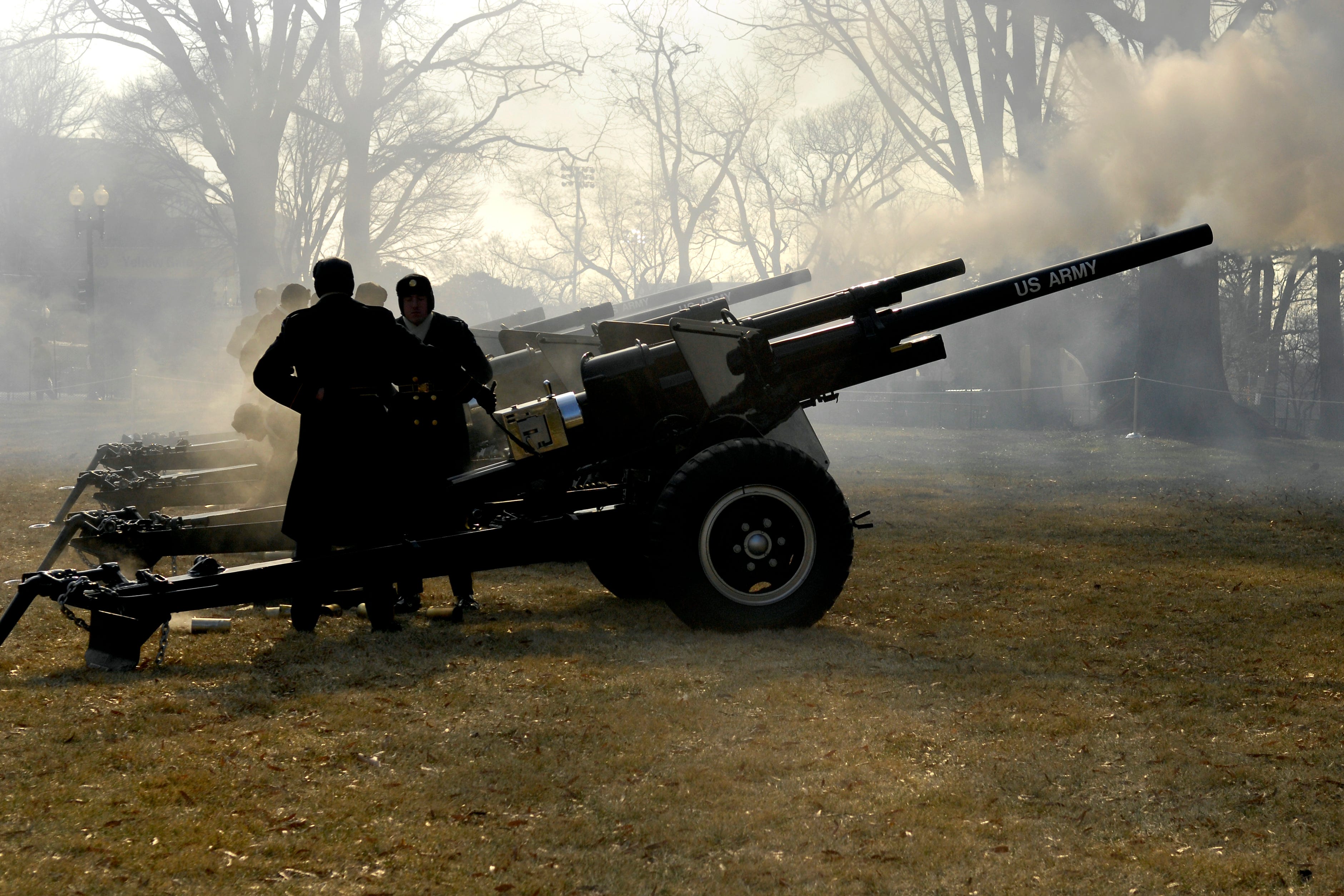
A true 21-gun salute doesn’t involve rifles at all; it requires a battery of artillery pieces or cannons. It is the highest ceremonial honor a nation can bestow.
Its roots lie in the Age of Sail. When a warship entered a friendly foreign port, it would fire its cannons into the open water to empty them. This was a literal demonstration of peaceful intentions—proving to the shore batteries that the ship was temporarily unable to attack.
Because shipboard gunpowder was limited, ships originally fired seven rounds. The shore batteries, with plenty of gunpowder to spare on land, would echo back three shots for every one fired by the ship. 7 x 3 = 21. Eventually, 21 guns became the international standard of diplomatic respect.
Today, a true 21-gun salute is strictly reserved for historic national occasions, the inauguration or funeral of a U.S. President, or welcoming foreign heads of state.
Why the Noise Matters This Weekend
As we celebrate the United States Semiquincentennial—250 years of a wild, enduring experiment in liberty—you’re going to hear a lot of explosions. The skies will be filled with fireworks, and at military installations across the country at noon, you might hear the measured boom of a 50-gun Salute to the Union (one round for every state).
Those reports are far more than noise. They are echoes of centuries-old customs designed to honor sacrifice and celebrate freedom.
As for Leroy D. Bug, his popsicle-stick casket has long since returned to the dust of the Indiana Law Enforcement Academy lawn, and I have no idea what became of that old VHS tape. But every time the Fourth of July rolls around and the ceremonial artillery starts to thunder, I can’t help but smile.
After all, not everyone gets full honors—and very few get their three volleys from a can of Raid.
Happy 250th, America! What’s the most creative way you’ve ever seen someone follow a rigid rule while completely twisting the spirit of it? Let me know in the comments!